Island Peak Expedition — 6,189m
Nepal's premier trekking peak. A perfect first Himalayan climb with glacier travel, fixed-rope ascent and the same historic training route used by Hillary and Tenzing before Everest.
Begin AscentOverview
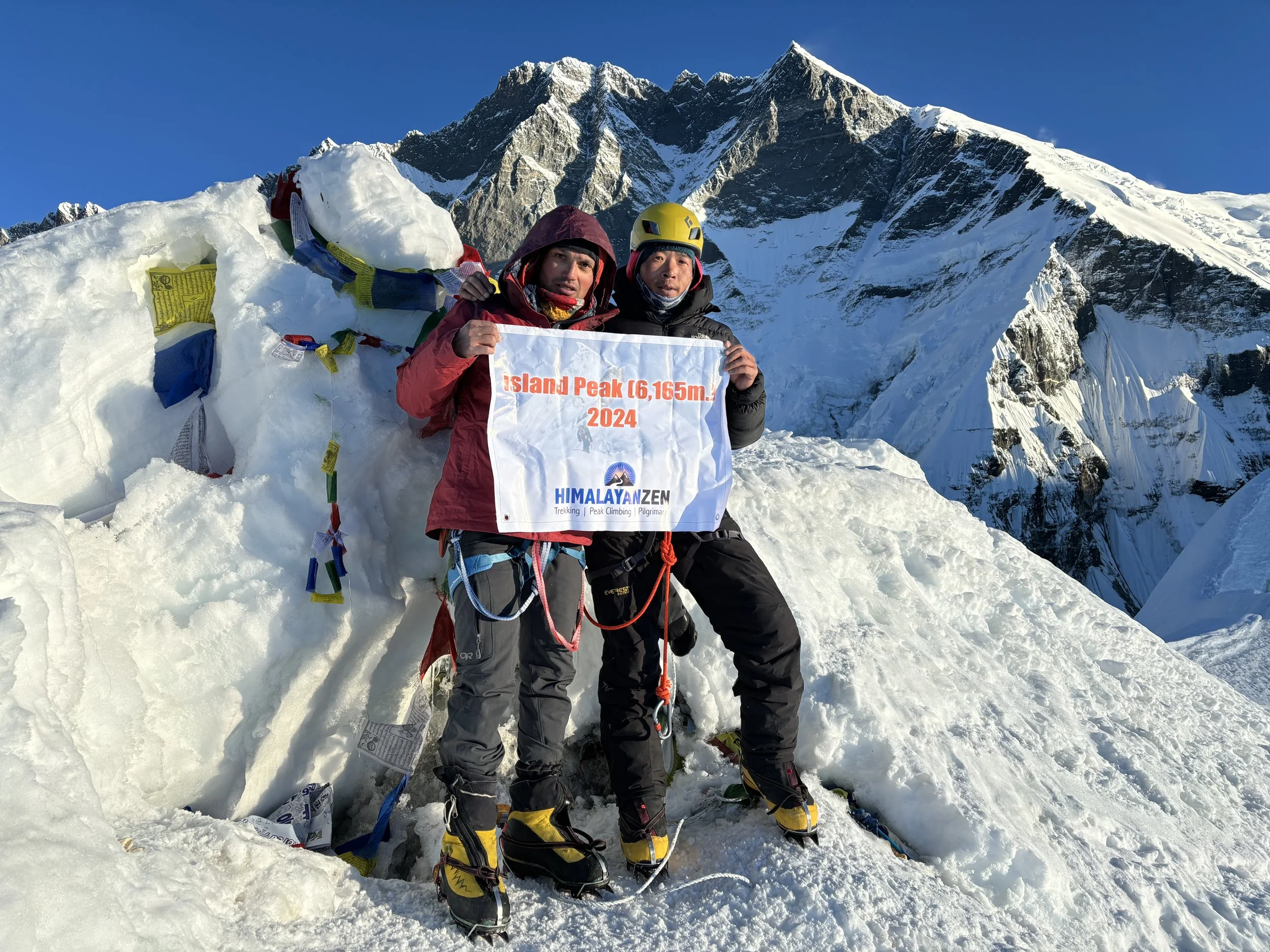
Island Peak (Imja Tse) is Nepal's most popular trekking peak — a 6,189m summit in the Khumbu region that combines the classic Everest Base Camp approach with a real mountaineering objective.
Historic Training Peak
Climbed by Hillary and Tenzing in 1953 to prepare for Everest — Island Peak has been the proving ground for Himalayan mountaineers ever since.
Everest Views
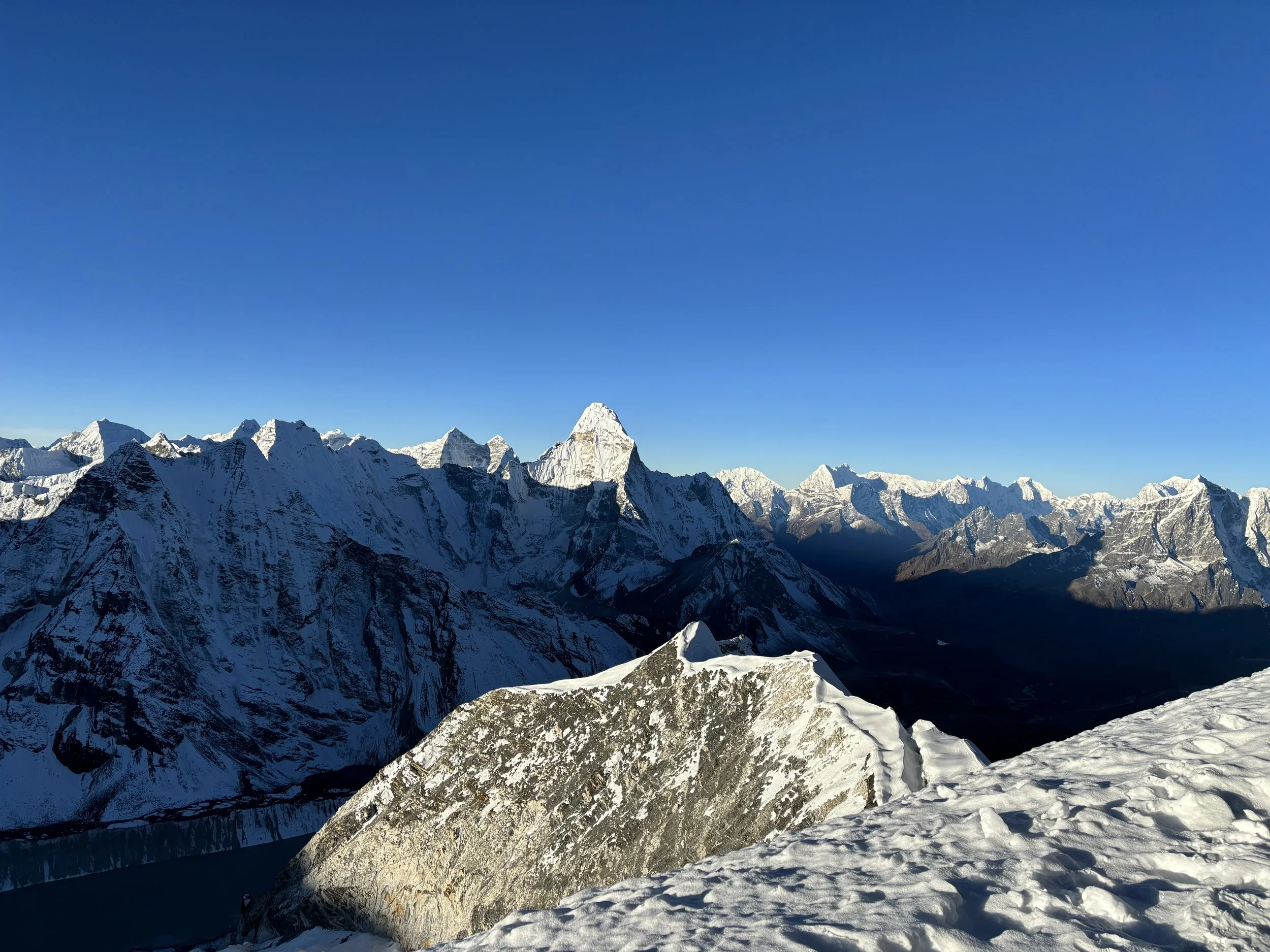
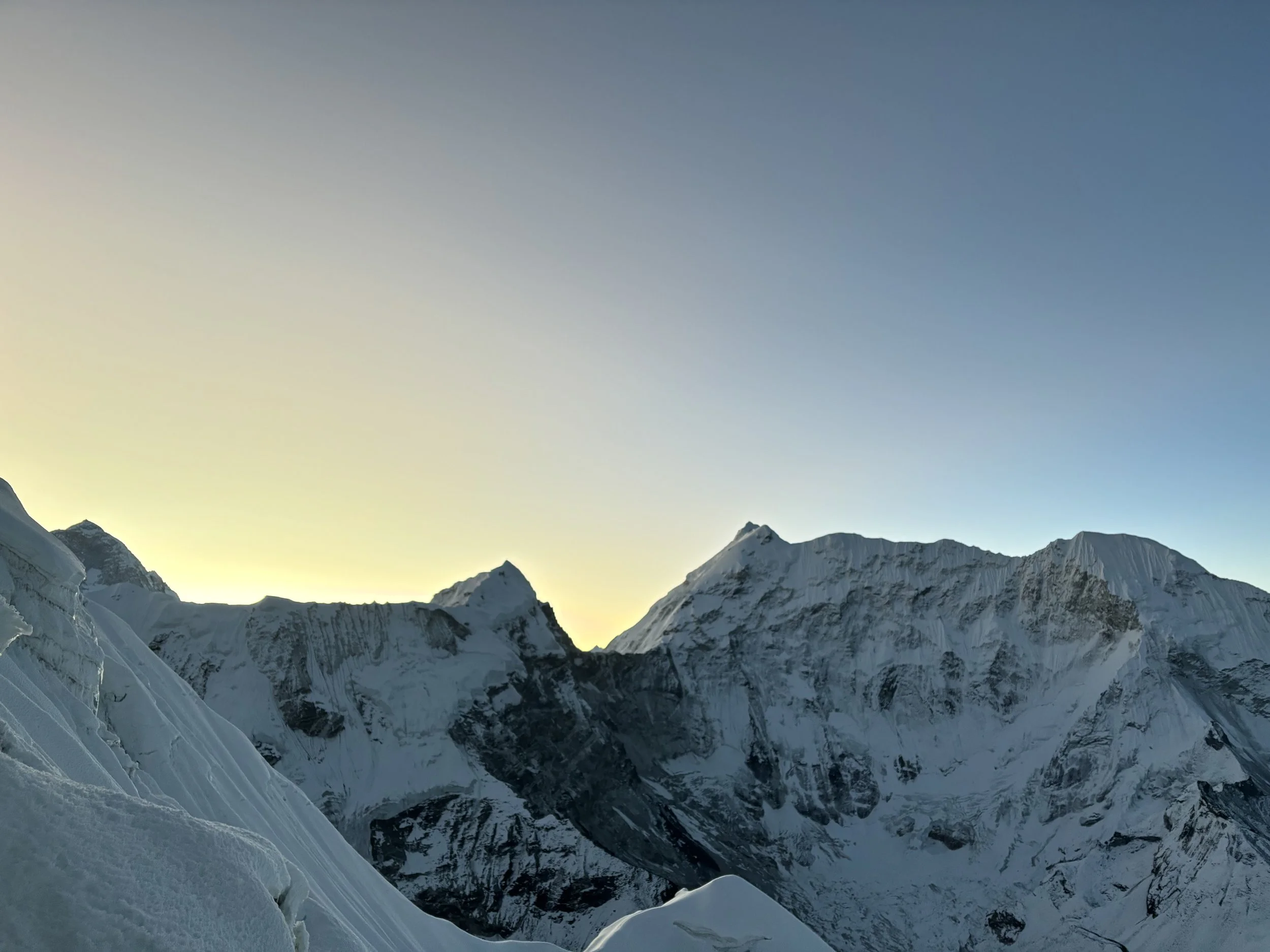
From the summit: Everest, Lhotse, Makalu, Cho Oyu, Ama Dablam and Nuptse — one of the finest 360° panoramas in the Himalaya.
Diverse Terrain
Sand, scree, rock and glacier ice — the route introduces you to a full range of high-altitude climbing skills with fixed-rope protection.
Small Groups
We cap every departure at 10 climbers. Summit day runs with a maximum 3:1 ratio between climbers and Sherpa guides.
The Climb
The classic Everest Base Camp approach with a real mountaineering objective at the end — paced for full acclimatization before summit day.
support_agent Direct Support
Questions about training or gear? Message our lead guide directly.
Phase I: Arrival & Preparation
Arrival at Tribhuvan International Airport, transfer to your hotel and evening briefing on the route, gear check and team introductions.
Full day in Kathmandu for permit processing, gear rental if needed, and a guided sightseeing tour of the valley's UNESCO heritage sites.
Phase II: The Everest Highway
Early morning flight to Lukla (2,840m). Meet the crew, then a gentle acclimatization trek down the Dudh Koshi valley to Phakding.
Cross the famous Hillary Suspension Bridge and climb through pine forest to Namche Bazaar — the bustling Sherpa capital of the Khumbu.
A full acclimatization day in Namche. Hike up to the Everest View Hotel (3,880m) for the first views of Everest, Lhotse and Ama Dablam, then return to Namche for the night.
A beautiful traverse along the Khumbu valley with Ama Dablam dominating the skyline. Visit Tengboche Monastery, the largest gompa in the Khumbu region.
Climb above the tree line into the upper Imja Valley. The landscape opens into arid alpine terrain with towering peaks on every side.
A second critical acclimatization day. Hike up to Nangkar Tshang (5,083m) for spectacular views of Makalu, Lhotse and Island Peak — then return to Dingboche for the night.
Phase III: Base Camp & Summit Push
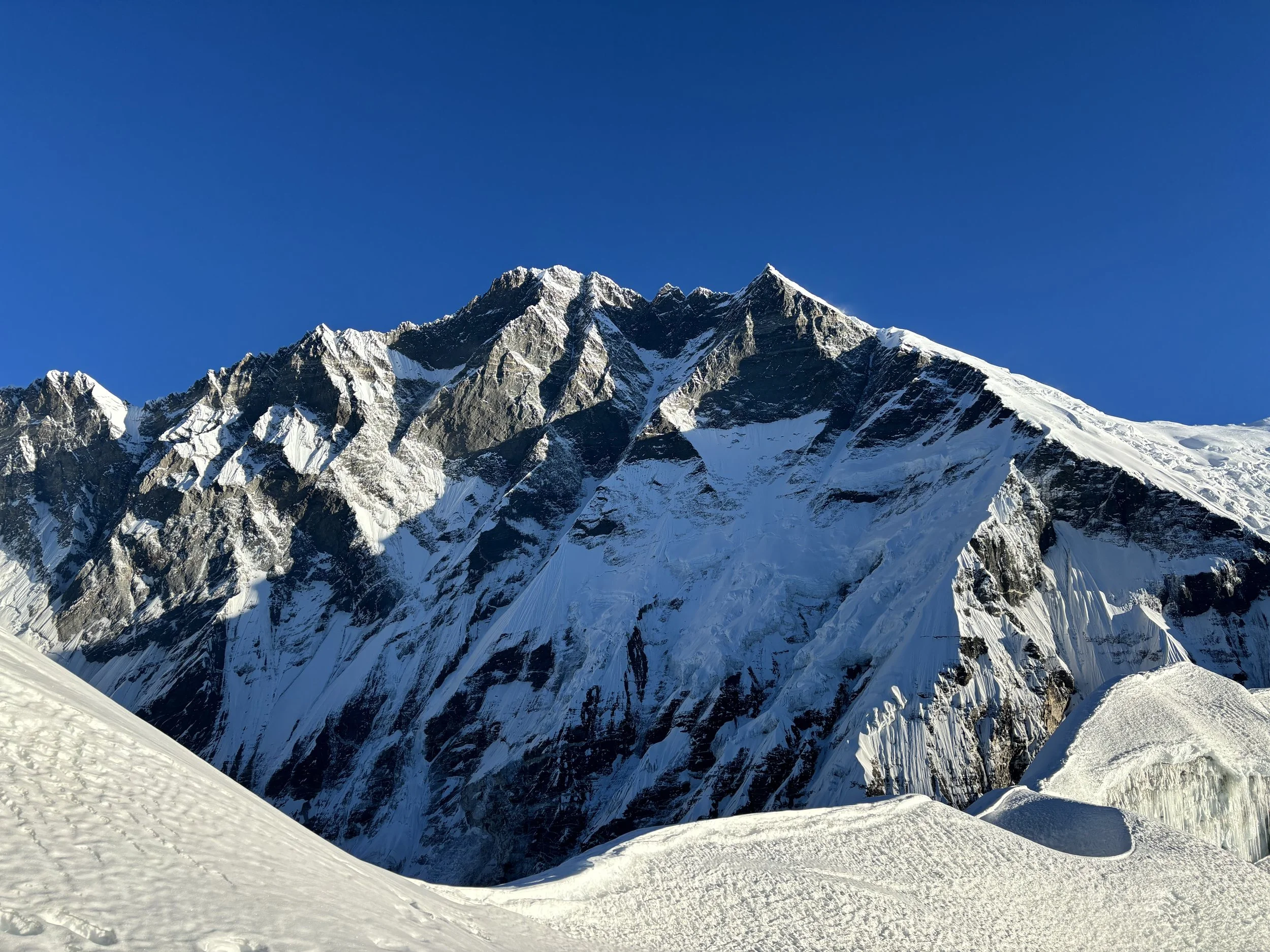
A short walk up the Imja Valley to Chukung, directly beneath the massive Lhotse face. Final gear check in the afternoon.
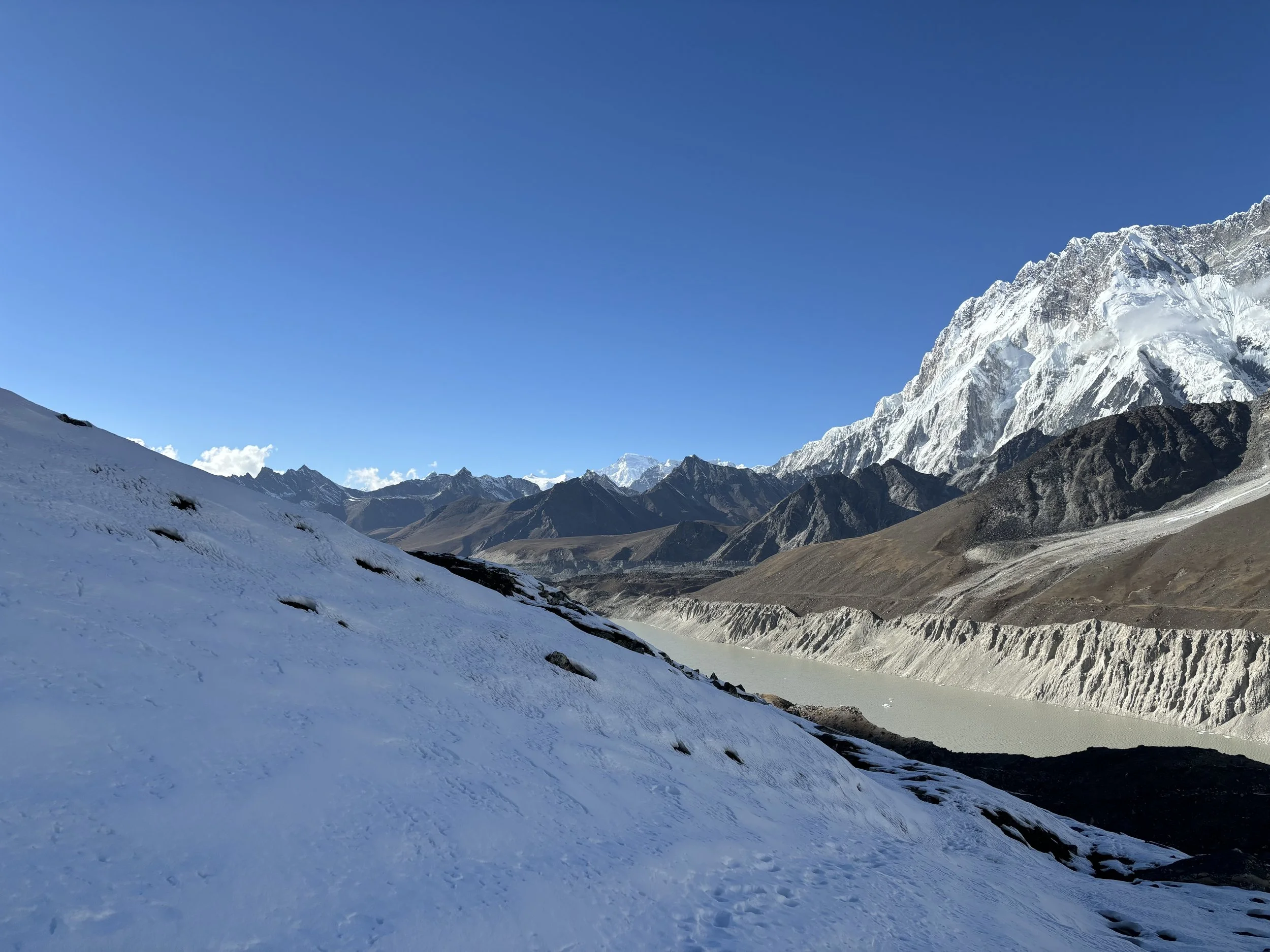
Trek across glacial moraine to Island Peak Base Camp. Afternoon training session on the glacier — fixed lines, crampon technique and ice-axe arrest.
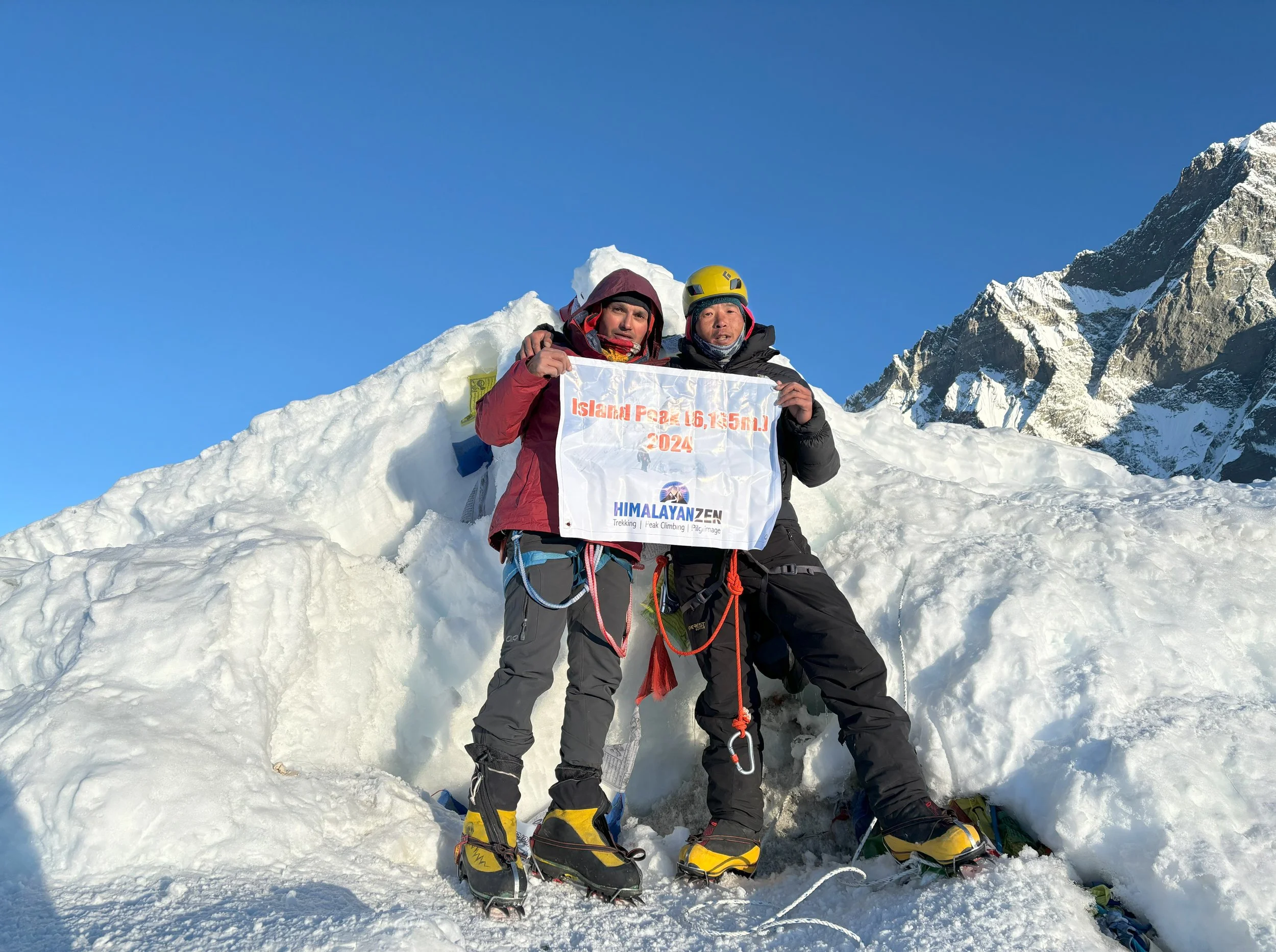
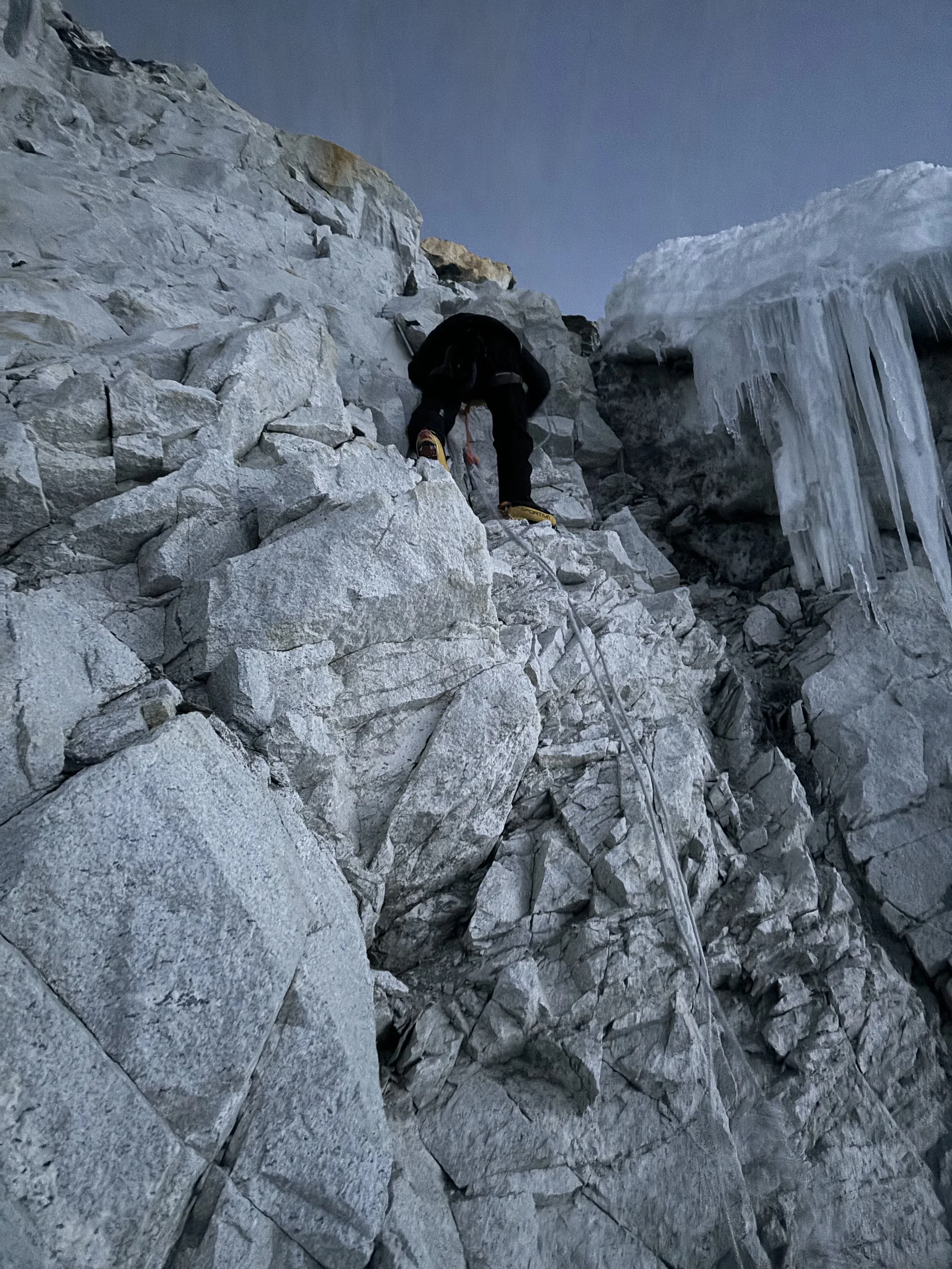
An alpine start around 1 AM. Climb the rocky gully, cross the glacier, then ascend the 100m ice headwall on fixed ropes to reach the summit ridge. From the top — Everest, Lhotse, Makalu, Cho Oyu and Ama Dablam in every direction. Descend to Chukung.
Phase IV: Return & Departure
A relaxed downhill day retracing our steps past Dingboche and back into the forest at Tengboche. Overnight at a teahouse.
Climb back over the ridge to Namche, with a final look back toward Ama Dablam. Overnight in Namche.
A long final trekking day back down the Dudh Koshi valley to Lukla. Celebration dinner with the crew.
Morning flight back to Kathmandu. Rest of the day free — shopping in Thamel or a celebratory meal.
A free day in Kathmandu. Optional guided tour to Boudhanath, Pashupatinath or Swayambhunath.
Transfer to Tribhuvan International Airport for your departure flight home — with summit memories and the blessings of the Khumbu.
Key Points on the Route
Lukla (2,840m)
The legendary gateway to the Khumbu — one of the world's most dramatic airstrips, perched on a mountainside with a single uphill runway.
Namche Bazaar (3,440m)
The bustling Sherpa capital of the Khumbu — bakeries, gear shops and the legendary Irish Pub, all built into a horseshoe-shaped bowl.
Tengboche Monastery (3,870m)
The largest gompa in the Khumbu region — a spiritual heart of the valley with a backdrop of Ama Dablam that has to be seen to be believed.
Dingboche (4,360m)
A windswept settlement in the upper Imja Valley — our second acclimatization stop and the doorstep to Island Peak.
Island Peak Base Camp (5,100m)
Set on glacial moraine directly beneath the mountain, this is where glacier skills training happens before the pre-dawn summit push.
The Summit (6,189m)
A true mountaineering objective — rocky gully, glacier, and a 100m fixed-rope ice headwall lead to a summit ridge with an unforgettable panorama.
Visions of Island Peak
The Ice Headwall
The 100m fixed-rope crux just below the summit ridge.
Rooftop of the World
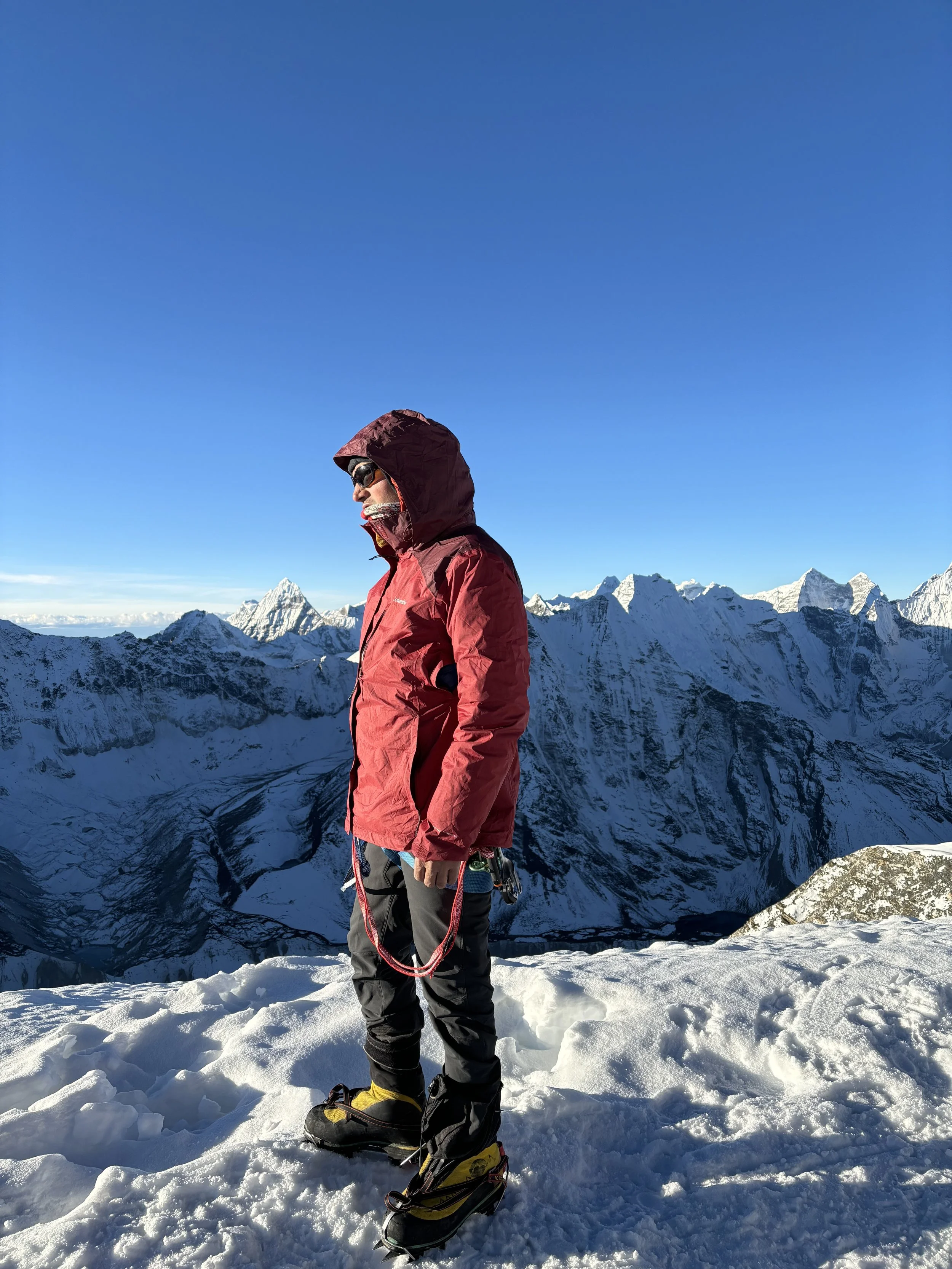
Alpenglow at 6,189m
Above the Clouds
The reward for an alpine start.
Preparing for Island Peak
Fitness & Training
Build endurance with hiking, running and step training 3-4 months out. You need to comfortably hike 6-8 hours with a loaded pack, plus plenty of uphill cardio.
Mountaineering Gear
B2 or B3 boots, crampons, harness, ice axe, ascender, down jacket and -20°C sleeping bag. Rental gear can be arranged in Kathmandu if needed.
Skills Day Included
You don't need prior mountaineering experience — a full glacier training day at Base Camp teaches crampon technique, rope work and ice-axe arrest before summit day.
Logistics
All-inclusive package covering flights to Lukla, Sagarmatha National Park permit, TIMS card and Island Peak climbing permit, teahouse lodging and 3 meals a day on trek.
Safety First
Supplemental oxygen at Base Camp, pulse oximeter checks twice daily, satellite phone on the mountain, and Sherpa guides with 10+ Island Peak summits each.
Everest Highway
The approach follows the classic Everest Base Camp trail — Namche, Tengboche, Dingboche — so you summit with the world's greatest peaks in view from start to finish.
What's Included & Excluded
Everything you need to know about what's covered in your Island Peak package.
check_circle Included
- check Airport transfers on arrival and departure
- check 3 nights in a 3-star hotel in Kathmandu with breakfast
- check Guided Kathmandu Valley sightseeing tour
- check Round-trip flight Kathmandu – Lukla – Kathmandu
- check Teahouse lodging throughout the trek
- check 3 meals a day during the trek (tea & coffee included)
- check Sagarmatha National Park permit + TIMS card
- check Island Peak climbing permit
- check Climbing Sherpa, high-altitude gear and group climbing equipment
- check Glacier training at Base Camp with crampons, harness & ice axe
- check Satellite phone for emergency communication
- check Experienced English-speaking Nepali climbing guide
cancel Excluded
- close International airfare to and from Kathmandu
- close Nepal visa fees (available on arrival)
- close Personal medical and travel insurance (must cover 6,500m)
- close Emergency helicopter evacuation costs
- close Lunch and dinner in Kathmandu (breakfast included)
- close All drinks beyond tea and coffee
- close Personal climbing gear (available for rent in Kathmandu)
- close Gratuities / tips for guide, Sherpa and porters
- close Costs arising from delays, weather or natural events
Dates & Availability
Island Peak has two main climbing seasons — spring (March-May) and autumn (October-December).
Why Choose Himalayan Zen
A first Himalayan summit deserves a team that has stood on it many times before.
Everest-Trained Leadership
Led by Everest summiteers and Sherpa guides with decades of Himalayan climbing — including 10+ Island Peak summits each.
Small Team, Close Ratio
We cap every Island Peak departure at 10 climbers with a maximum 3:1 climber-to-guide ratio on summit day.
Real Skills Training
A full glacier, crampon and rope day at Base Camp — so first-time mountaineers arrive at the headwall confident and competent.
Daily Health Monitoring
Twice-daily pulse and oxygen checks at altitude, supplemental oxygen at Base Camp, and satellite phone support on the mountain.
Our Lead Guides
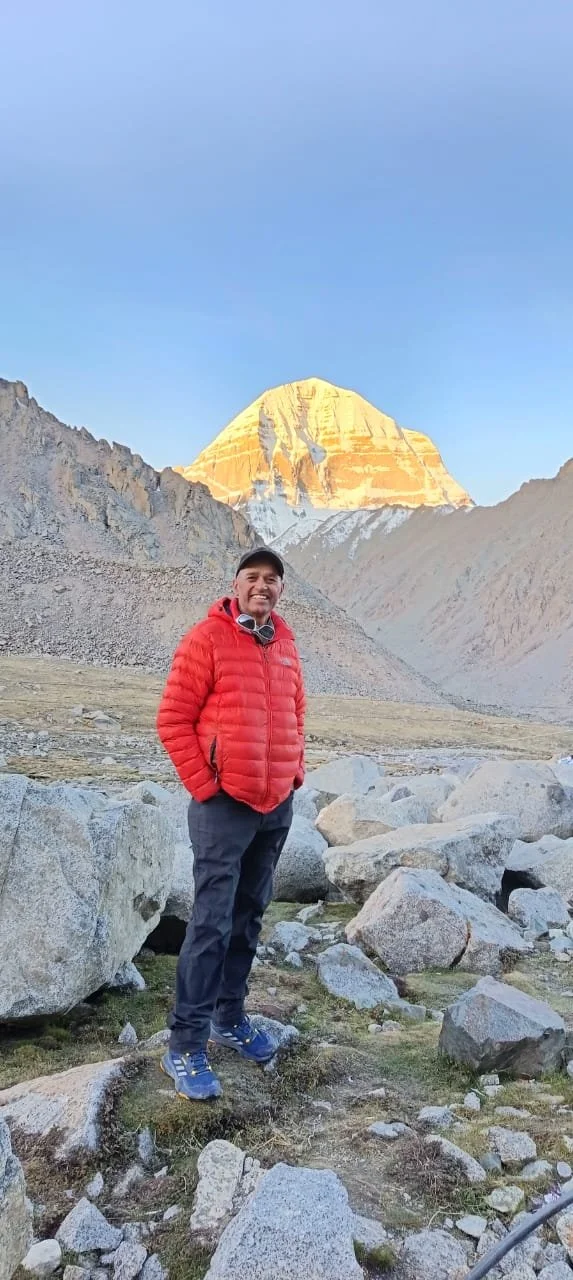
Moti Bhattarai
Over four decades guiding in the Nepal Himalaya — including more than 70 Kailash treks — Moti's calm, patient leadership underpins every Island Peak expedition.
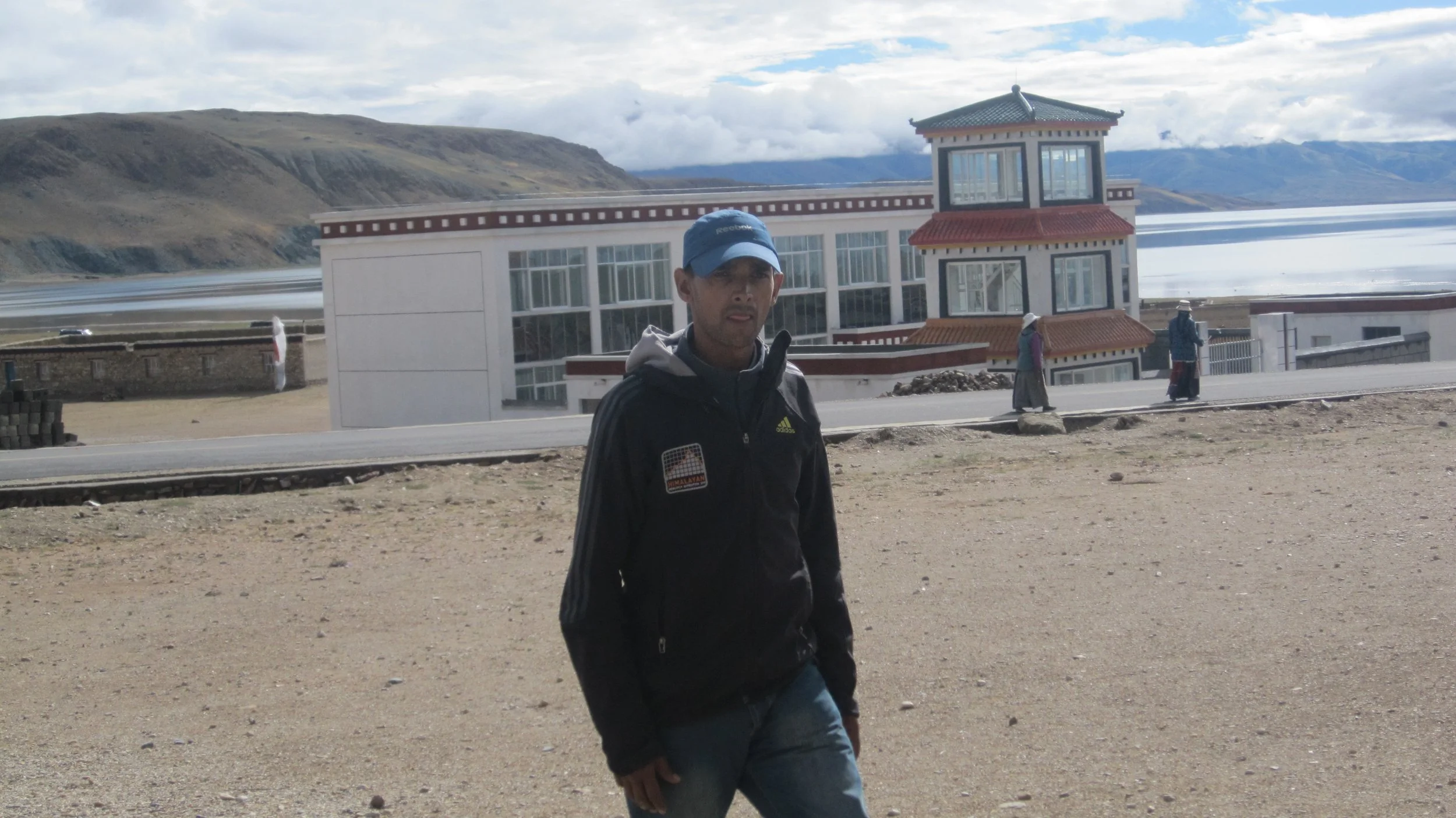
Anil Bhattarai
Anil summited Everest in 2005 and has led treks and expeditions across the Himalayas for nearly thirty years — his experience shapes every safety decision on summit day.
What Climbers Say About Island Peak
From EBC trekker to island peak summiteer
I'd trekked to Everest Base Camp twice but never climbed. The glacier training at Island Peak Base Camp made all the difference — by the time we hit the headwall, using the jumar and crampons felt second nature. Standing on the summit looking straight at Everest was the moment of my life.
read more +Anil's judgment call saved our summit
The weather turned at Base Camp overnight. Anil made the call to delay by four hours and we got a perfect weather window — clear skies all the way to the ridge. That kind of experience only comes from years on the mountain. Himalayan Zen's logistics on the Everest highway were flawless too.
read more +Perfect progression from Mera Peak
Having done Mera with Himalayan Zen last year, Island Peak felt like the natural next step. The two extra acclimatization days at Namche and Dingboche made the altitude feel easy. The crew were the same faces from last year — that continuity matters at 6,000m.
read more +You May Also Like

Ready to Climb Island Peak?
Summit permits are limited each season and Lukla flights fill fast. Secure your place on Nepal's most iconic first mountaineering objective.